Schwerlast-Niederhubwagen bei NKT
Mit 120 t auf neuen Wegen
Schwerlast-Niederhubwagen bei NKT
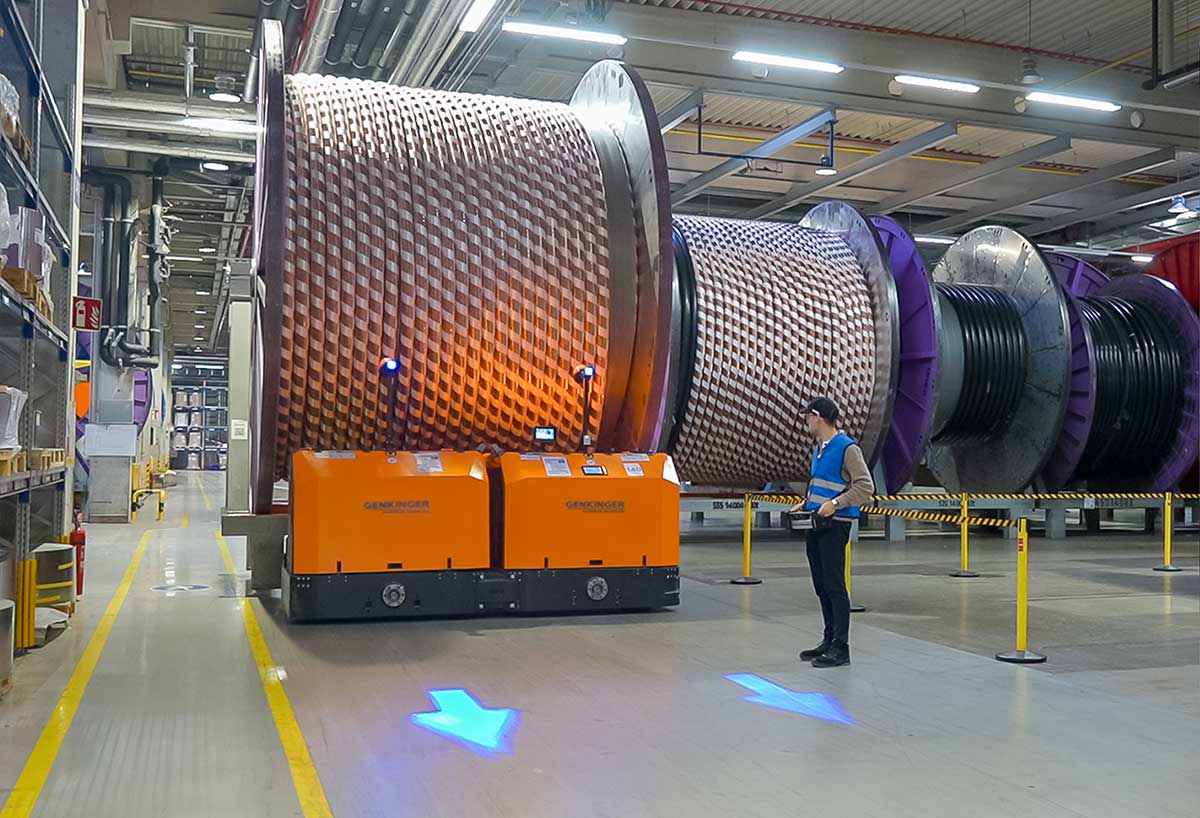
Bis zu 120 Tonnen schwere Kabelsystemspulen, enge Fahrwege und eine bestehende Produktionsumgebung: Gemeinsam mit NKT hat Genkinger eine Transportlösung für anspruchsvolle Bedingungen entwickelt. Ein Schwerlast-Niederhubwagen übernimmt den Transport zwischen den Bearbeitungsstationen und verbindet hohe Tragfähigkeit mit teilautomatisierten Fahrfunktionen.
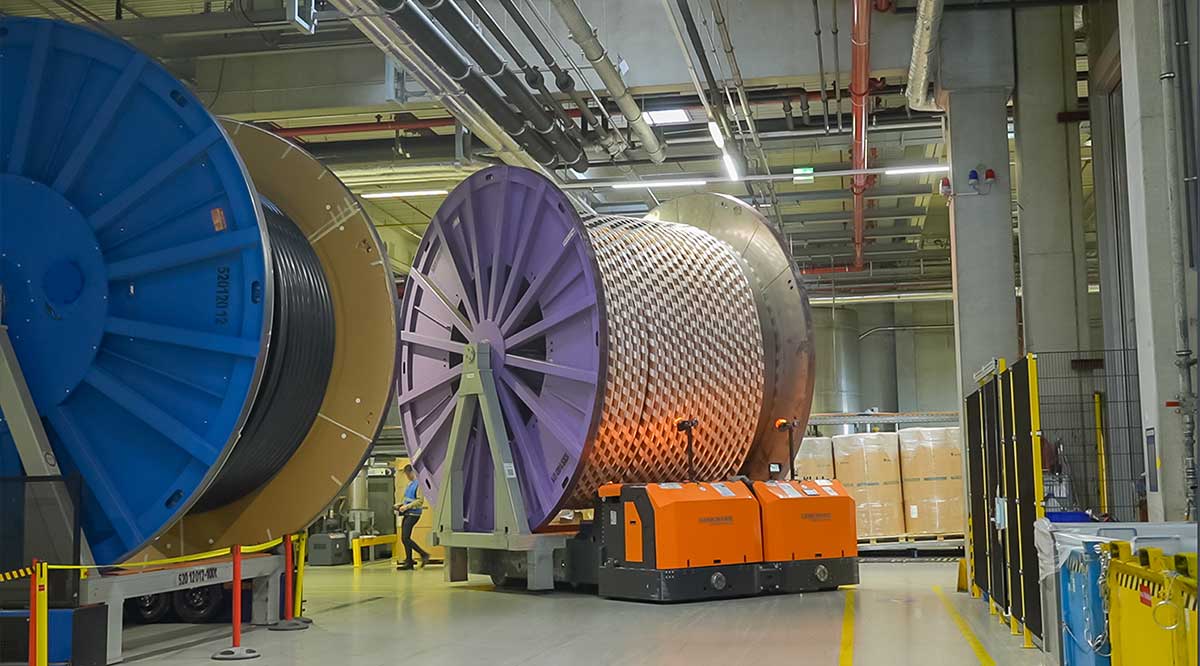
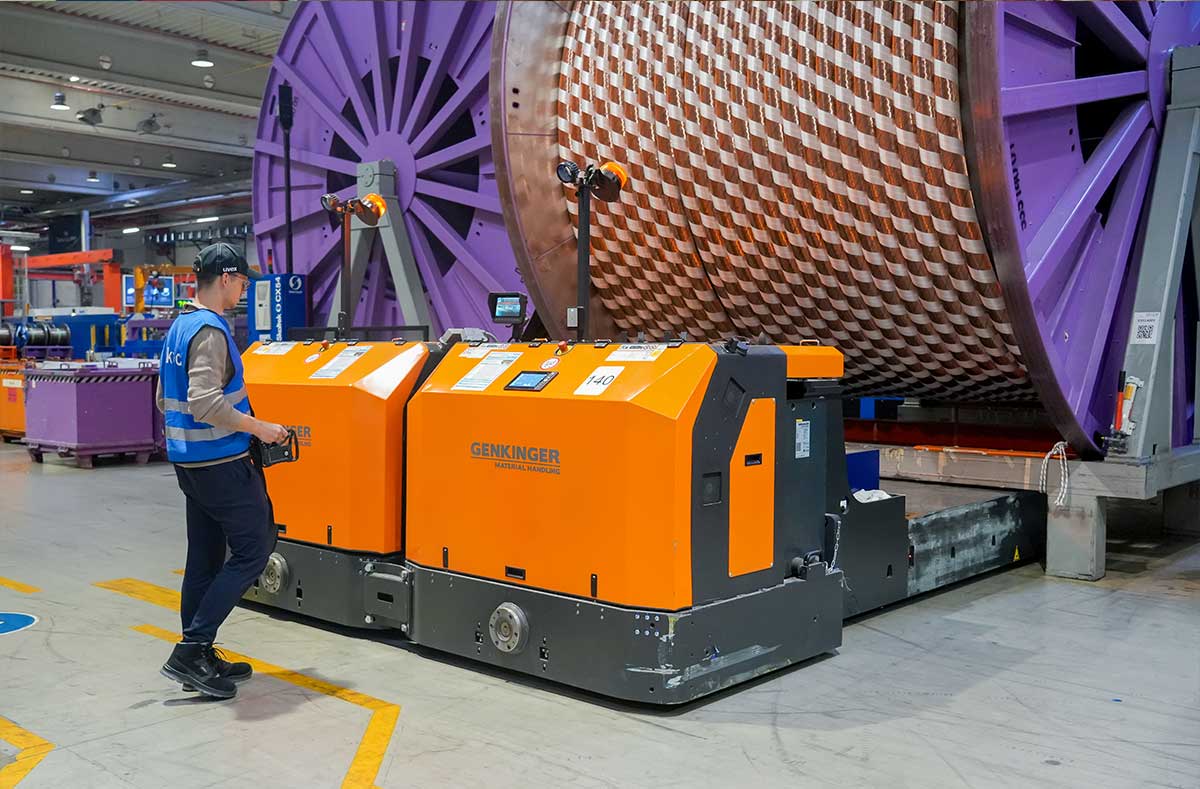
Die NKT-Kabel entstehen in mehreren aufeinanderfolgenden Produktionsschritten und erreichen Durchmesser von etwa 80 bis 160 mm. Eine typische Kabellänge liegt bei rund zwei Kilometern, auf einer Systemspule können dabei 100 t Material und mehr zusammenkommen.
Während des Entstehungsprozesses der Kabel werden die Zwischenprodukte Metall, Beschirmung und Ummantelung auf unterschiedlichen Systemspulen von Station zu Station transportiert. Nach dem Aufwickeln werden sie zunächst in Temperkammern gefahren, danach zur sogenannten Schirmstraße und anschließend zu den Mantelstraßen. Die Grundform der Spulengestelle bleibt dabei ähnlich, ihre Länge verändert sich jedoch mit den jeweiligen Produktionsschritten.
„Das Besondere an unserem Kölner Werk ist, dass wir mit den vorhandenen Platzverhältnissen umgehen müssen. Entsprechend wichtig ist für uns die Systemspulenlogistik innerhalb der Produktion“, sagt Linus Stengel, Projektingenieur in der Instandhaltung bei NKT. Eine neue Transportlösung muss also nicht nur 100 bis 120 t bewegen können, sondern sich in eine bestehende enge Produktionsumgebung einfügen.
Alternative zum Luftkissen
Bislang setzt NKT für diese Transporte Luftkissenfahrzeuge ein. Das Prinzip bietet bei schweren Lasten eine hohe Beweglichkeit, stellt jedoch besondere Anforderungen an die Beschaffenheit und Sauberkeit der Fahrwege. Hinzu kommen Luftschläuche und der Wartungsaufwand der Systeme. Den Anstoß, für diesen Transportprozess über ein grundsätzlich anderes technisches Prinzip nachzudenken, gab Marcus Boland vom Genkinger-Vertrieb: Er sprach NKT gezielt auf die bestehende Aufgabenstellung an und brachte die Entwicklung einer alternativen Lösung ins Gespräch. Dass Genkinger von NKT berücksichtigt wurde, ergab sich auch dadurch, dass NKT das Unternehmen aus einem früheren Leerspulen-Projekt kannte. Als bei dem Sondermaschinenhersteller Konzepte für Tragfähigkeiten jenseits der 100-Tonnen-Marke diskutiert wurden, sah Boland in der Anwendung bei NKT einen konkreten Ansatzpunkt. „Wir hatten nicht von Anfang an eine fertige Maschine im Kopf. Entscheidend war zunächst die Frage: Wie können wir den bestehenden Transportprozess bei NKT mit einem anderen technischen Prinzip lösen?“ Zunächst wurde über zwei separate Antriebseinheiten nachgedacht, die getrennt fahren und jeweils Lasten bis 60 t aufnehmen sollten. Im Verlauf der Konzeptarbeit wurde dieser Ansatz weiterentwickelt. Gemeinsam mit NKT und der Genkinger-Konstruktion entstand daraus die Lösung mit dem neuen Schwerlast-Niederhubwagen.
Millimeterarbeit mit 120 t
Im Zug der technischen Aufgabeerledigung musste neben der Tragfähigkeit vor allem die zulässige Hertzsche Pressung des Hallenbodens berücksichtigt werden. Gleichzeitig standen für die Fahrmanöver nur begrenzte Arbeitsräume zur Verfügung. Besonders deutlich wird das an den Temperkammern. Hier muss das Fahrzeug mit der aufgenommenen Systemspule auf sehr engem Raum positioniert werden. Die realisierte Maschine besteht aus einer gekoppelten Master-Slave-Konfiguration. In der heute realisierten Anwendung konzentriert sich der Einsatz auf Systemspulen im Bereich von 100 bis 120 t; dafür bleiben die beiden Einheiten dauerhaft miteinander verbunden. Für Genkinger bedeutete das Projekt zugleich einen Schritt in eine neue Leistungsklasse. „120 t mit diesem Niederhubprinzip waren auch für uns eine neue Dimension. Entscheidend war aber nicht allein die Tragfähigkeit, sondern die Maschine so auszulegen, dass sie in den vorhandenen Arbeitsräumen bei NKT tatsächlich funktioniert“, sagt Boland.
Gerade dieser Punkt unterscheidet die Lösung von einem reinen Schwerlast-Plattformfahrzeug. Die Last wird über das Niederhubprinzip aufgenommen. Hierbei wurde die Fahrwerks- und Steuerungskonzeption auf die vorhandenen Spulengestelle und die Wege im Werk abgestimmt. Nach rund einem Jahr Projektzeit erfolgte die Werksabnahme bei Genkinger in Münsingen, anschließend wurde das Fahrzeug in Köln in Betrieb genommen.
Der Fahrweg liegt im Hallenboden
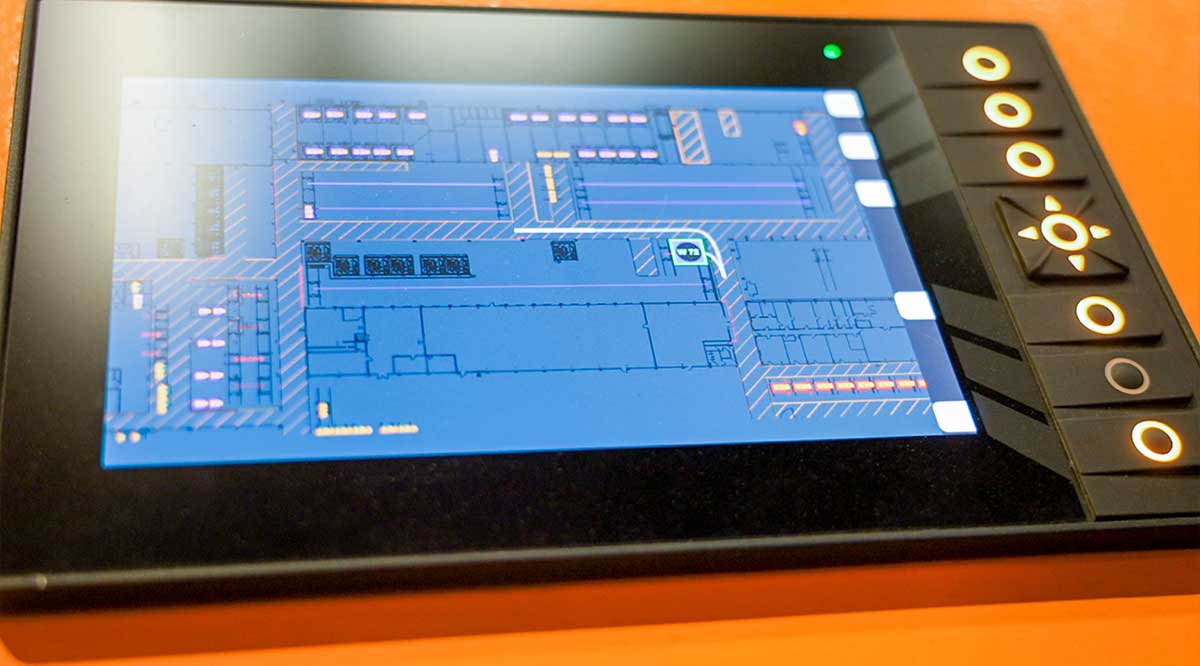
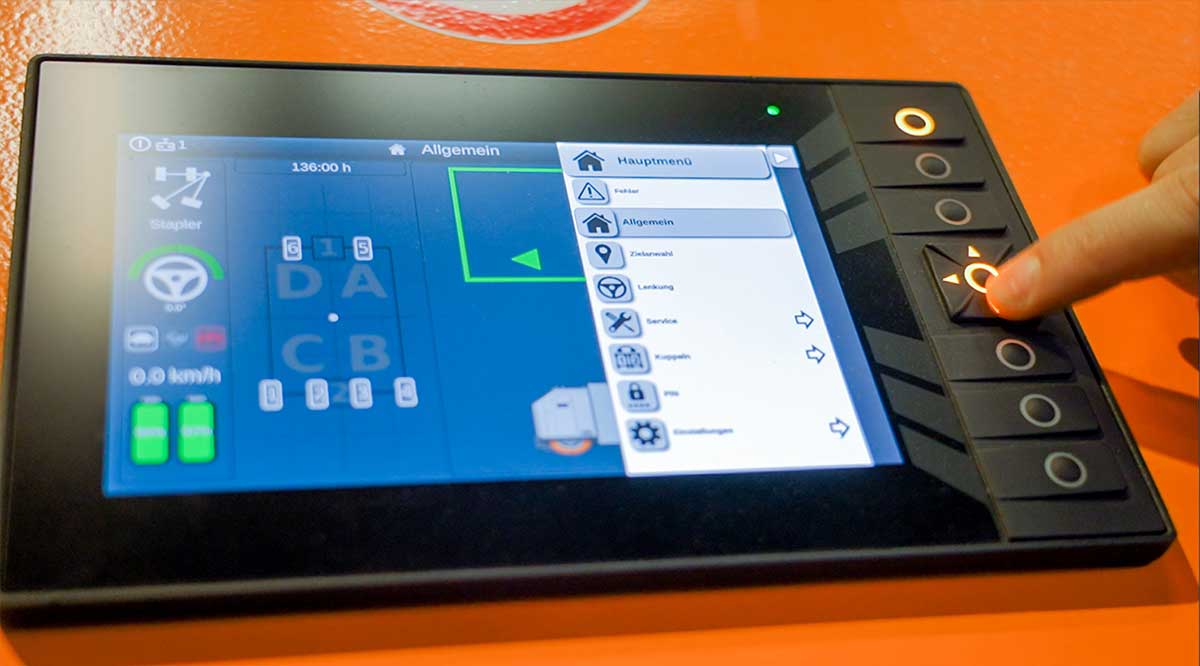
Ein entscheidender Baustein der Lösung ist die Teilautomatisierung der Fahrbewegungen. Dazu wurden mehrere hundert RFID-Transponder in den Hallenboden eingelassen. Jeder Transponder besitzt eine Kennung, anhand derer die Steuerung die aktuelle Position des Fahrzeugs bestimmt. Auf dem Display steht dem Bediener ein Hallenplan zur Verfügung. Dort wählt er das gewünschte Ziel aus. Anschließend folgt das Fahrzeug der hinterlegten Route. Der Bediener begleitet den Transport mit der Funkfernsteuerung und überwacht den Fahrweg. An definierten Übergabepunkten, beispielsweise an Wicklern oder Temperkammern, positioniert sich das Fahrzeug selbstständig.
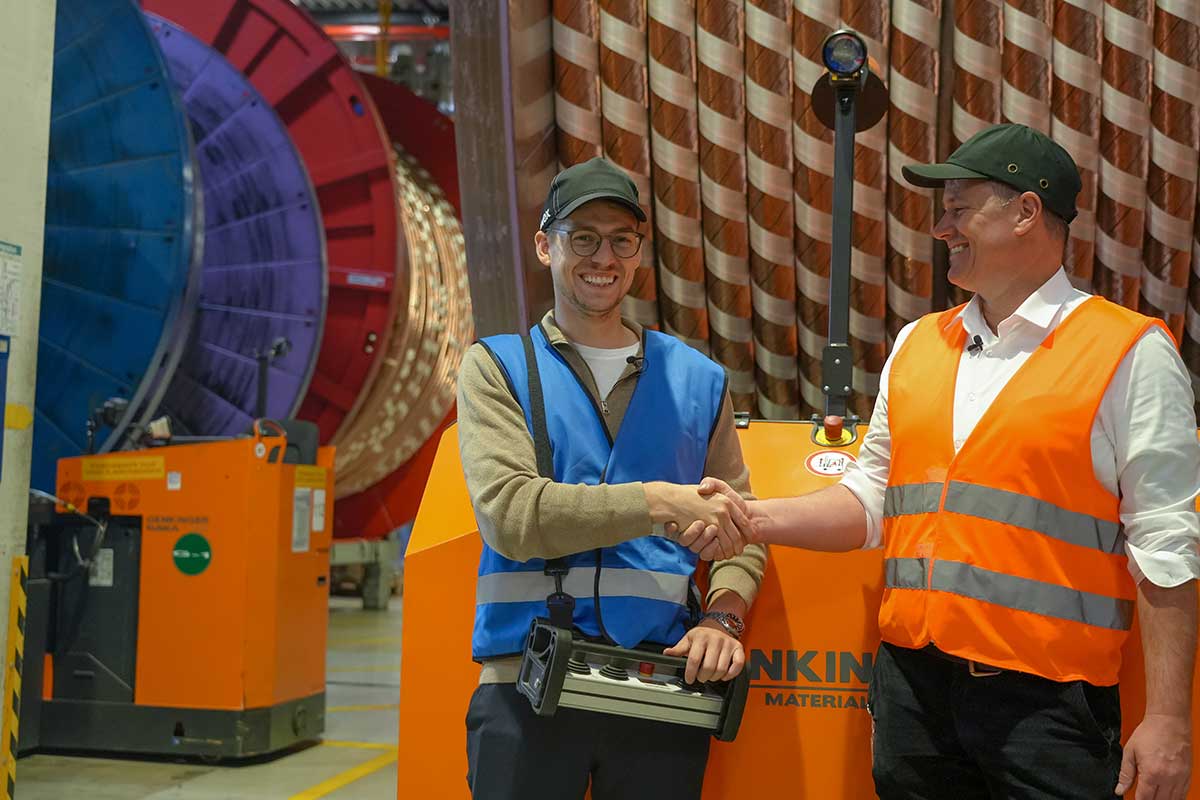
Gerade bei den engen Einfahrten verspricht sich NKT davon zusätzliche Vorteile. „Wird der automatisierte Fahrbetrieb genutzt, muss sich der Bediener nicht mehr darauf konzentrieren, welchen Weg er fahren muss. Das macht das Handling für ihn deutlich schneller und einfacher“, sagt Stengel. Dabei verfolgt NKT einen pragmatischen Ansatz. Die Teilautomatisierung wird schrittweise in den Produktionsalltag integriert. Für genauere Aussagen zu Zeit- oder Produktivitätsgewinnen sei es im Moment noch zu früh, sagt Stengel; der automatisierte Betrieb müsse längere Zeit genutzt werden, bevor die Effekte statistisch präzise gemessen werden können. Eine der wichtigsten Rückmeldungen kommt deshalb derzeit aus der Produktion selbst. Dort wird die neue Transporttechnik bereits im manuellen Betrieb eingesetzt. Die Erfahrungen sind nach Aussage von Stengel sehr positiv: „Wir sehen, dass die Maschine in der Produktion mit offenen Händen angenommen wird. Die Kollegen freuen sich über das Fahrzeug und loben seine Zuverlässigkeit.“
Langfristig soll die neue Technik die vorhandenen Luftkissenfahrzeuge schrittweise ablösen. Die einmal aufgebaute Infrastruktur für die teilautomatisierten Fahrwege schafft dafür eine wichtige Grundlage. Für Stengel liegt ein wesentlicher Erfolgsfaktor des Projekts auch in der Zusammenarbeit. Er übernahm das Vorhaben auf NKT-Seite im Verlauf der Projektphase und begleitete die weitere Umsetzung.
Nicht immer lief dabei alles auf Anhieb perfekt, was für ein Sonderprojekt dieser Größenordnung wenig überrascht. Entscheidend war für ihn der Umgang damit. „Die Zusammenarbeit war entspannt und insgesamt einfach gut. Bei einem solchen Projekt hat jeder sein Aufgabenpäckchen zu erledigen. Wenn irgendwo ein Problem aufgetaucht ist, haben wir es gemeinsam aufgenommen und aus dem Weg geräumt.“ Besonders hebt Stengel dabei die Unterstützung durch Marcus Boland und die schnelle Reaktion von Genkinger hervor, wenn während der Umsetzung Anpassungen notwendig wurden.
Ausgangspunkt bei dem 120-t-Fahrzeug war weder ein fertiges Lastenheft noch eine Standardmaschine aus dem Katalog. Gemeinsam entstand eine Lösung für einen Materialfluss, der den Umgebungsbedingungen Rechnung trägt. Systemspulen mit rund zwei Kilometer langen, verschiedenartigen Stromkabeln werden durch ein Werk transportiert, in dem jeder Quadratmeter zählt. Die neue Transportlösung zeigt damit, wie sich eine spezifische Schwerlastaufgabe gemeinsam von Anwender und Hersteller neu denken lässt.

Genkinger Electric Pedestrian Tugger and Coil Transport Racks
Efficient Coil Transport in Stamping Production with
Genkinger Electric Pedestrian Tugger and Coil Transport Racks
Custom Transport Solution for Steel Coils up to 12 Tons
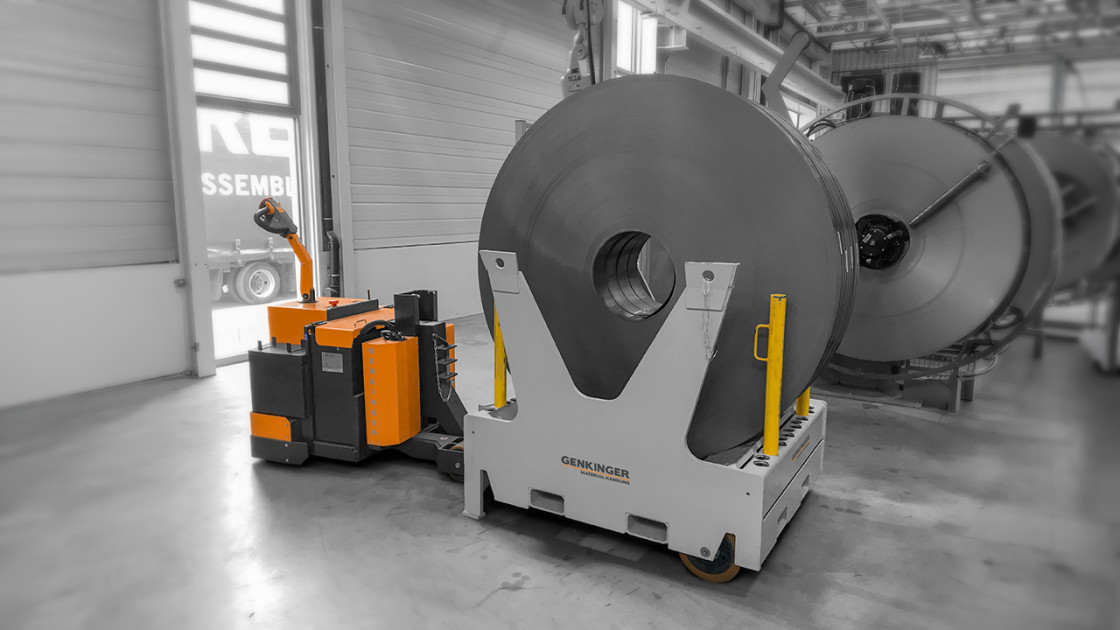
For a customer in the automotive / stamping technology sector, Genkinger developed a custom solution for internal coil transport. The combination of the EGS130 electric pedestrian tugger and specially developed coil transport racks enables the safe and flexible transport of steel coils weighing up to 12 tons.
The challenge was to reliably pick up heavy steel coils from the storage area, move them in a controlled manner to the coiling line, and ensure an efficient material flow within production.
The Solution: EGS130 Electric Pedestrian Tugger with Coil Transport Racks
Genkinger implemented a combined transport solution consisting of the EGS130 electric pedestrian tugger and mobile coil transport racks.
The electrically powered tugger has a towing capacity of 13 tons and enables flexible transport of the loaded racks within the production environment. The coil transport racks are picked up via a height-adjustable ball head with a lifting range of approximately 292 to 432 mm.
For flexible operation, the EGS130 can be controlled via both the tiller and a radio remote control. This allows the transport process to be precisely controlled and carried out from a safe distance.
Optimized for Daily Production Use
The solution was specifically designed for 2- to 3-shift operation. An integrated roller conveyor enables quick and ergonomic battery changes.
The coil transport racks are designed for loads up to 12 tons and feature integrated stanchion slots for secure fixation of the steel coils during transport.
Further Features:
- Fork pockets for pickup with a forklift
- Crane eyes for transport with overhead cranes
- Stackable design for space-saving storage
Efficient Material Flow in Metal Processing
The combination of the electric pedestrian tugger and coil transport racks optimized the internal material flow. The steel coils are reliably transported to the coiling line and made available for further processing.
The solution reduces manual transport efforts, relieves employees of heavy transport tasks, and ensures a continuous supply to production facilities.
Advantages of the Coil Transport Solution at a Glance
- Transport of steel coils up to 12 tons
- Electric pedestrian tugger with 13 tons towing capacity
- Flexible control via tiller or radio remote control
- High maneuverability within the production hall
- Suitable for multi-shift operation
- Space-saving storage of coil transport racks
- Adapted to the requirements of metal processing
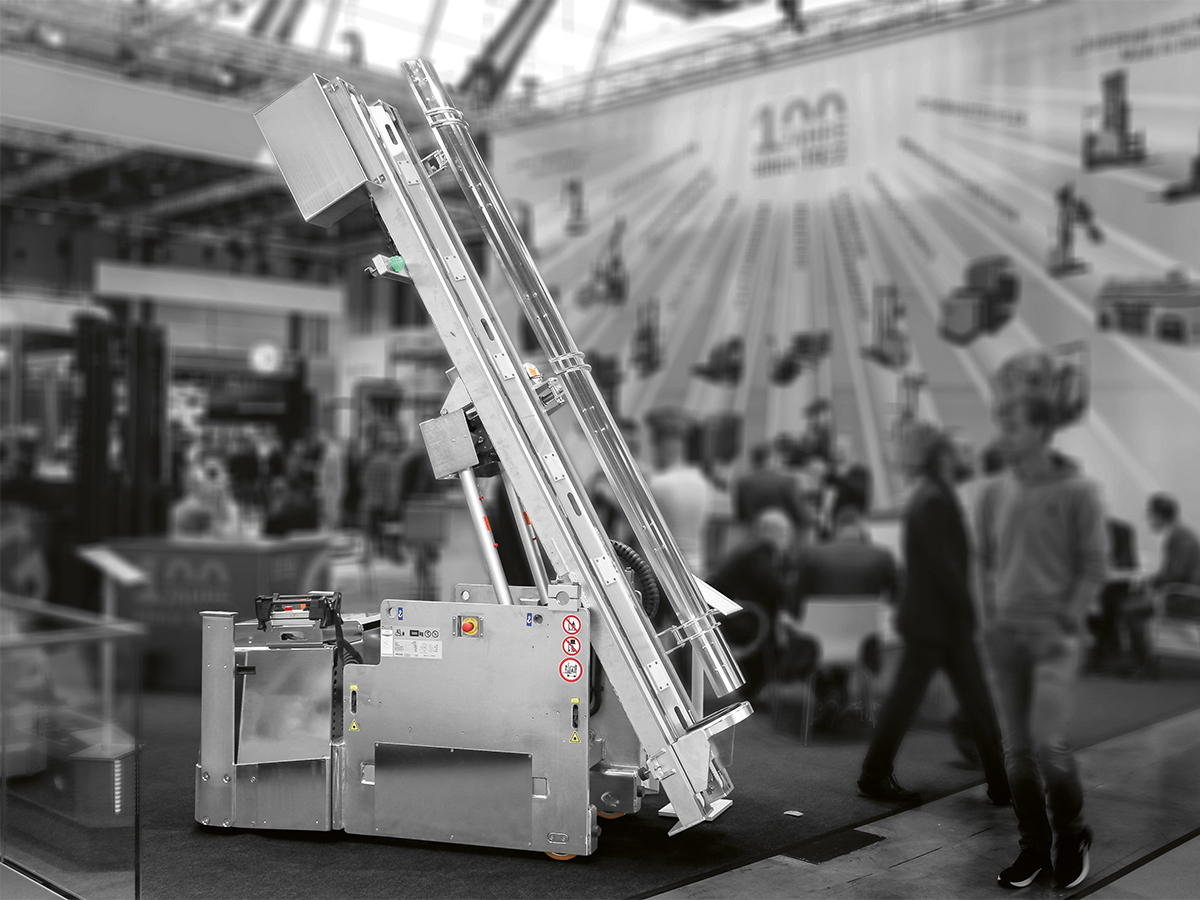
Precise handling of silicon rods under challenging conditions
Custom solution for the semiconductor industry
Precise handling of silicon rods under challenging conditions
In semiconductor manufacturing, precision, cleanliness and process reliability are decisive factors, especially when handling silicon rods. High temperatures, strong electromagnetic fields and, not least, cleanroom requirements pose major technical challenges. For a customer from the semiconductor industry, we developed an innovative custom solution: a non-magnetic, electropolished handling vehicle that was designed and built specifically for the temperature-resistant, precise and automated removal and transport of silicon rods in sensitive manufacturing processes.
Automated process integration in a high-tech environment
The vehicle is integrated into the production process and communicates directly with the pulling system.
- Exact positioning: The operator controls the vehicle via radio remote control. Laser pointers and floor markings support precise alignment in front of the pulling system.
- Automated communication: Via a Wi-Fi connection, the vehicle exchanges signals with the pulling system for lowering and stopping the receiving plate by means of a rope length encoder.
- Safe load transfer: The silicon rods are picked up and set down on an electrically driven support plate with a foldable fall-prevention device.
- Gentle lowering movements: The pulling system control regulates, on the one hand, the lowering speed and, on the other hand, via a weighing device, the contact weight of the silicon rod in the receiving plate. This protects the sensitive material.
- Separation of the crystal thin neck: After the transfer process is complete, the system separates the thin neck while the handling vehicle holds the weight.
- Flexible downstream processing: Using the radio remote control, the operator swivels the receiving trough into the horizontal position, transports the crystal to the transfer station and returns to the parking position.
Operation & safety
The intuitive radio remote control with ergonomic operating logic enables safe manual control.
- Safety features: Emergency stop, status indicators and multi-stage enable logic increase operational safety.
- Even in the event of faults or system shutdown, the vehicle remains fully controllable.
Cleanroom suitability & cleaning
The vehicle was developed specifically for use under cleanroom conditions in accordance with ISO 14664-1, Class 9. It ensures that silicon rods are picked up and transported cleanly and free of contamination. This makes a decisive contribution to maintaining the highest cleanliness standards in semiconductor manufacturing.
- Smooth, media-resistant surfaces that significantly reduce particle adhesion
- Electropolished stainless-steel components that enable particularly gentle and easy cleaning, thereby minimizing the risk of contamination
Designed for continuous operation
The design is optimized for 3-shift operation with minimal maintenance effort.
- Electric drive: no hydraulics for higher precision and lower wear
- Durable components with high cycle resistance
Customer-specific development for the highest requirements in semiconductor production
This custom solution was created in close cooperation with our customer and was precisely tailored to the extreme conditions in silicon crystal growth and wafer production.
By combining many years of experience in special-purpose machine engineering, in-depth materials expertise and intelligent system integration, we created a non-magnetic handling vehicle that meets the demanding requirements of the semiconductor industry:
It ensures maximum process reliability, protects the cleanliness of sensitive silicon crystals and enables a precise, automated sequence within the sensitive manufacturing chain.
The customer received a tailor-made custom solution that integrates seamlessly into the existing production process and has proven itself under real operating conditions as efficient, robust and reliable.
Stainless steel AGV lift mast for the automated transport of brass waste
Lift mast
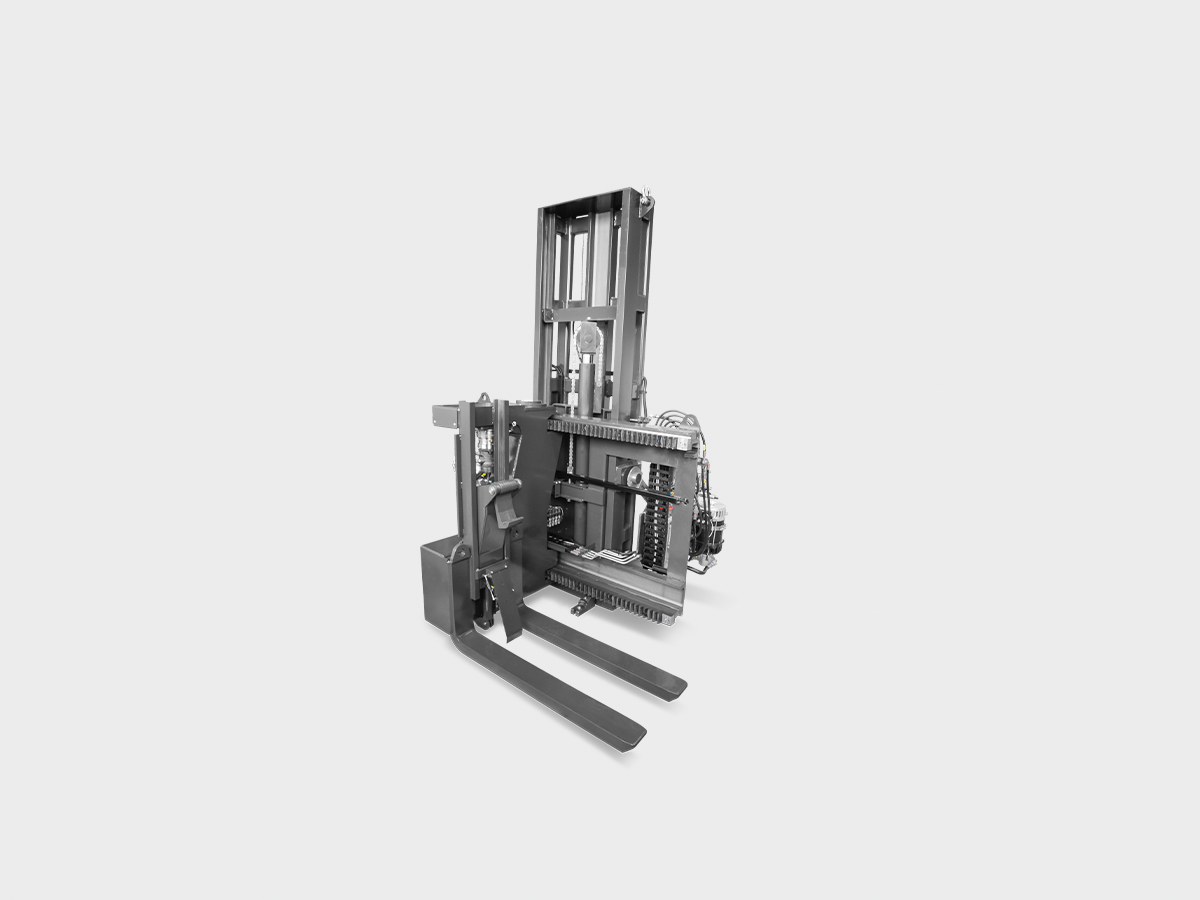
Stainless steel AGV lift mast for the automated transport of brass waste
In metal processing, the internal transport of bulk material such as brass waste presents specific challenges. Heavy bulk boxes must be safely picked up, transported, and emptied. Conventional systems often reach their limits here: loss of time, safety risks, and unnecessary maneuvering slow down the material flow.
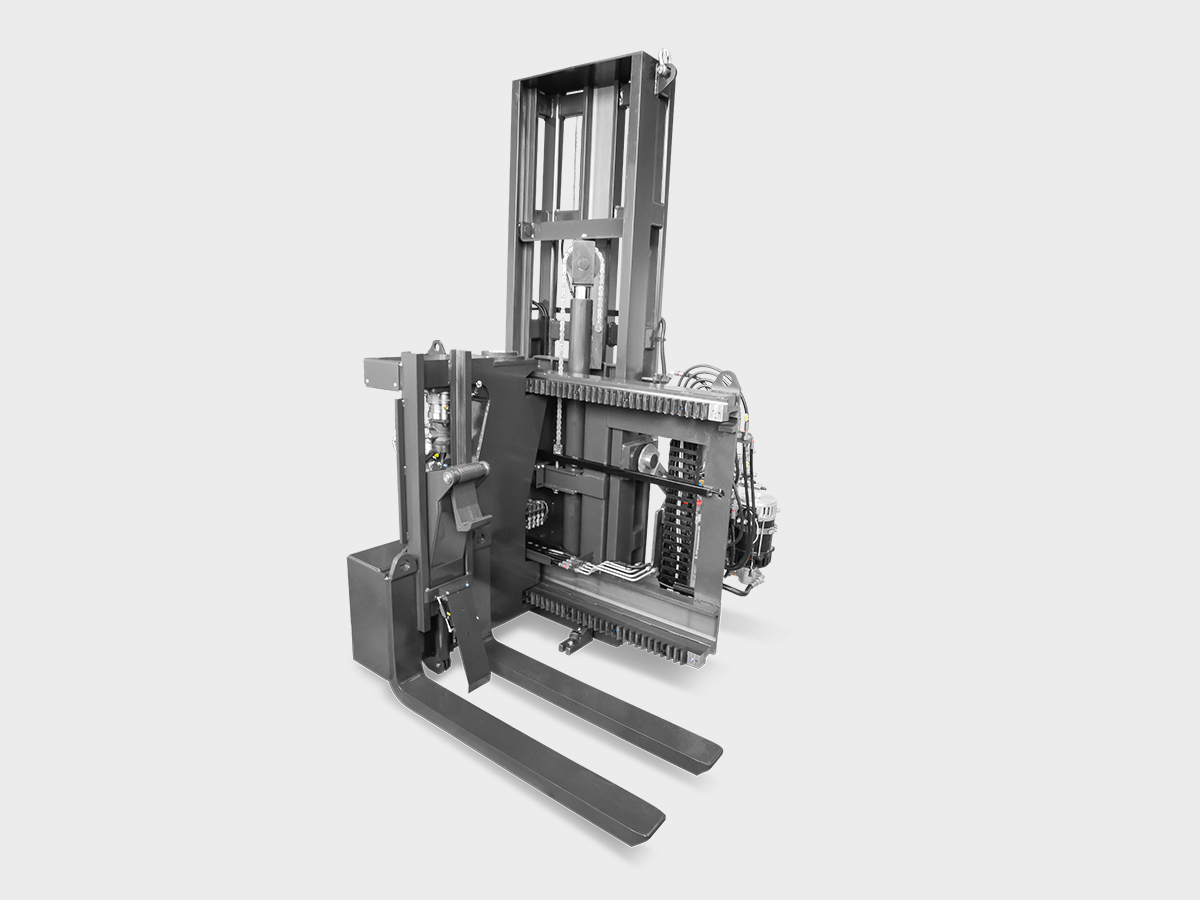
We have developed a customized solution for these requirements: a **stainless steel AGV lift mast** for attachment to an automated guided vehicle. The system picks up bulk boxes automatically, transports them to the unloading point, and stores them specifically in racks. The vehicle does not need to be repositioned or operated manually.
The bulk box is picked up via the wide side. The AGV enters the container with its forks and reliably secures the load. Thanks to the integrated tilting mechanism, the material can be poured out directly at the unloading point.
A hydraulic cylinder lifts the upper part of the box and enables controlled emptying. Precise placement in the rack is carried out via a single-sided side-shift fork. This allows the load to be stored without the vehicle having to realign its position.
This saves time and increases process reliability in the warehouse.
- Automated transport of bulk material in brass processing
- Pickup via the wide side with a special fork system
- Hydraulic emptying mechanism for controlled pouring
- Side-shift fork for single-sided rack storage without repositioning
- Customized design based on intensive customer coordination